

Latest Articles
- Does my adult patient need a measles vaccine?
Possibly. Adults without acceptable presumptive evidence of immunity to measles should receive 1 dose of the measles-mumps-rubella vaccine, and 2 doses are recommended for adults in special situations.
- Do I need to treat supine hypertension in my hospitalized patient?
Inpatients with an elevated supine blood pressure should be evaluated for orthostatic changes before treatment is considered.
- The gift of lasting immunity
Measles vaccine–induced immunity, although not necessarily lifelong for all individuals, is quite durable.
- Alpha-gal syndrome: Recognizing and managing a tick-bite–related meat allergy
Alpha-gal syndrome is an emerging allergic condition in which immunoglobulin E–mediated symptoms are triggered a few hours after an affected person consumes mammalian meat.
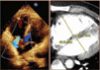 Managing right ventricular failure in the setting of pulmonary embolism
The authors review current management strategies, including medical, percutaneous interventional, and surgical options, and discuss recent advances in the field.
- The beat goes on: Highlights from the new American and European A-fib guidelines
The authors discuss and compare the latest atrial fibrillation guidelines from American and European medical societies.
- What diagnostic tests should be done after discovering clubbing in a patient without cardiopulmonary symptoms?
Computed tomography of the patient’s chest is indicated based on the robust association between clubbing and intrathoracic malignancy.
- Tinea incognito
This atypical form of dermatophyte infection is caused by local immune suppression from systemic or topical corticosteroids.
- New atrial fibrillation guideline: Modify risk, control rhythm, prevent progression
Key updates in the new American guideline include recommendations for aggressive lifestyle and risk-factor modifications, annual assessment of thromboembolic risk, and early rhythm control.